The System Breaks Before the Leader Does
Three CEOs in six years. A brand-new executive leadership team. A reduction in force that still hung in the air like smoke.
I walked into that offsite and sat across from eleven people who were, individually, exactly the kind of leaders you'd want running a business. Deep functional expertise. Real operational credibility. Every one of them committed to making this work.
And yet — nothing was moving.
The board called it a leadership problem. The investors were losing patience. The new CEO had inherited a team that could diagnose every issue in the business but couldn't seem to execute against any of them.
I've sat in enough of these rooms to know what this actually is.
It's not a talent problem. It's never the talent.
It's the system the talent is operating inside.
This company's operating architecture had been built for a simpler version of itself — fewer product lines, smaller geographic reach, and a competitive landscape that rewarded functional depth. In that world, you didn't need shared enterprise ownership. You needed strong leaders running strong functions and a CEO connecting the dots.
But the business had outgrown that design. Complexity had scaled. The architecture hadn't. And now enterprise execution lived in exactly two seats — the CEO and one operational anchor — while everyone else executed brilliantly inside their own lanes and wondered why nothing moved laterally.
Before two recent offsites — one public company, one PE-backed — I asked both CEOs the same question: How clear is the strategic prioritization?
Both said it was clear.
Then we got in the rooms.
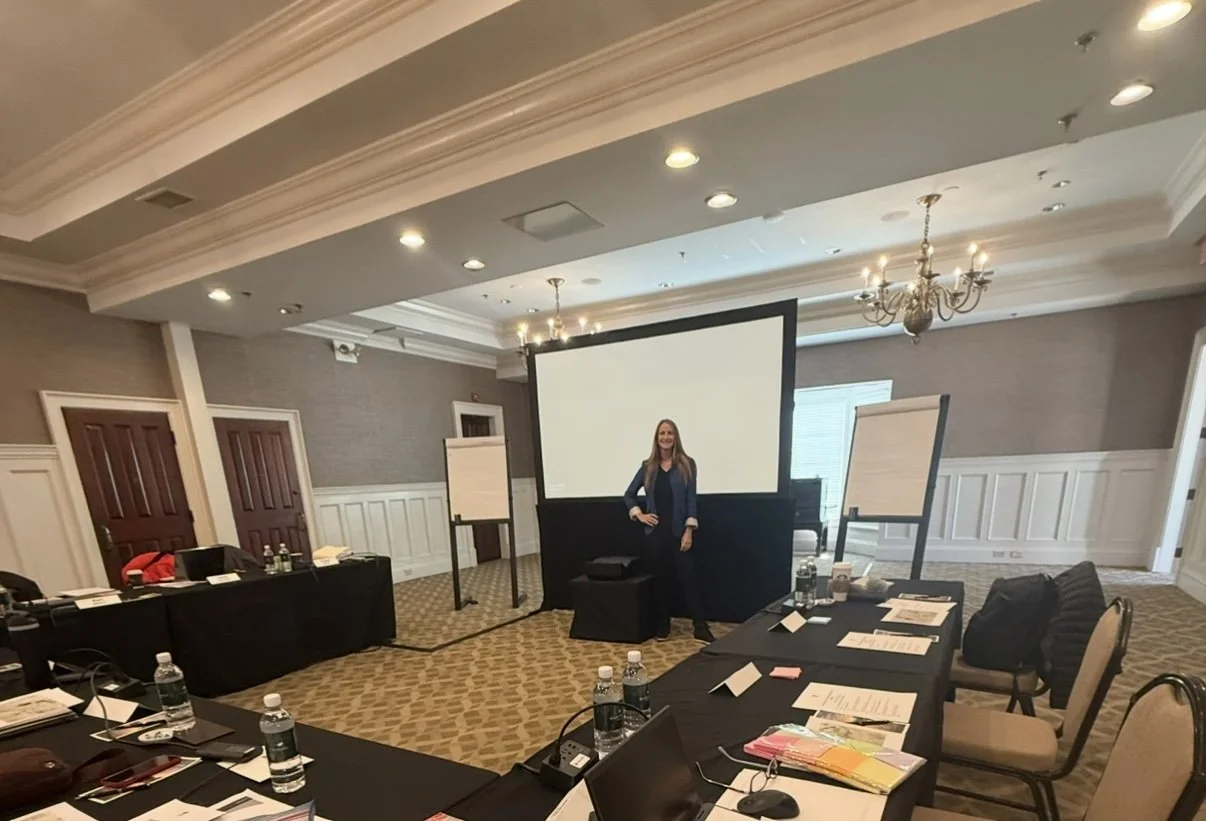
ELT war room
Twenty-seven initiatives. Overlapping timelines. Execution dependent on the same six people across nearly every workstream. The teams had strategy decks, but they didn't have strategic clarity. Those are not the same thing.
I see this pattern constantly. The CEO believes priorities are obvious — because at their altitude, they are. But by the time that clarity filters through an executive team with eleven different functional lenses, it fractures. Everyone is working hard. Nobody is working on the same thing.
If it's not clear to the ELT, it cannot possibly be clear to the teams underneath them. And when 3,000 people are executing against priorities they each interpret slightly differently, you don't get misalignment. You get the illusion of alignment — which is more expensive, because no one realizes it's broken until results miss.
The fix isn't inspiration. It's surgery.
You have to force-rank initiatives by scale of impact and readiness to execute — and then be willing to kill the darlings. Every leadership team has them: the initiatives that feel good, generate internal enthusiasm, and drive almost nothing. They survive because nobody wants to be the one to say it out loud. But every darling that stays on the list steals resources from the two or three things that would actually move the business.
Twenty-seven initiatives isn't a strategy. It's a to-do list dressed up in a PowerPoint. Real strategic clarity means a leadership team can name — without checking a deck — the three things that matter most this year and who owns each one.
I asked one question that made it visible: Who here owns enterprise execution?
Silence. Not because they didn't care. Because the system had never asked.
That silence is the most expensive sound in a PE-backed company. It's the sound of alignment in the conference room and skepticism in the hallway. Decisions announced, commitments assumed, follow-through negotiated behind closed doors. When commitments stay private, execution stays optional. And optional execution in a transformation environment isn't just slow — it's fatal.
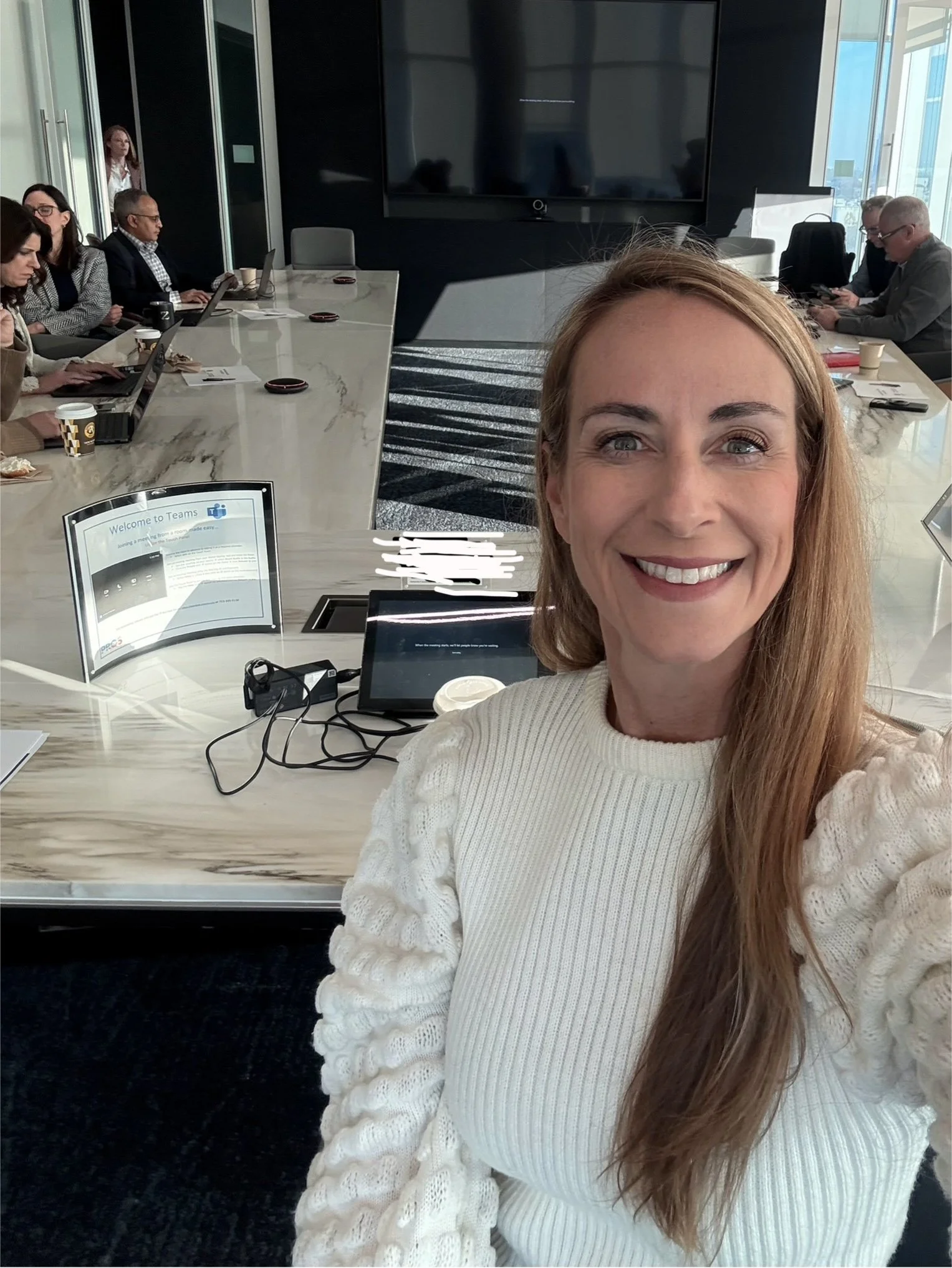
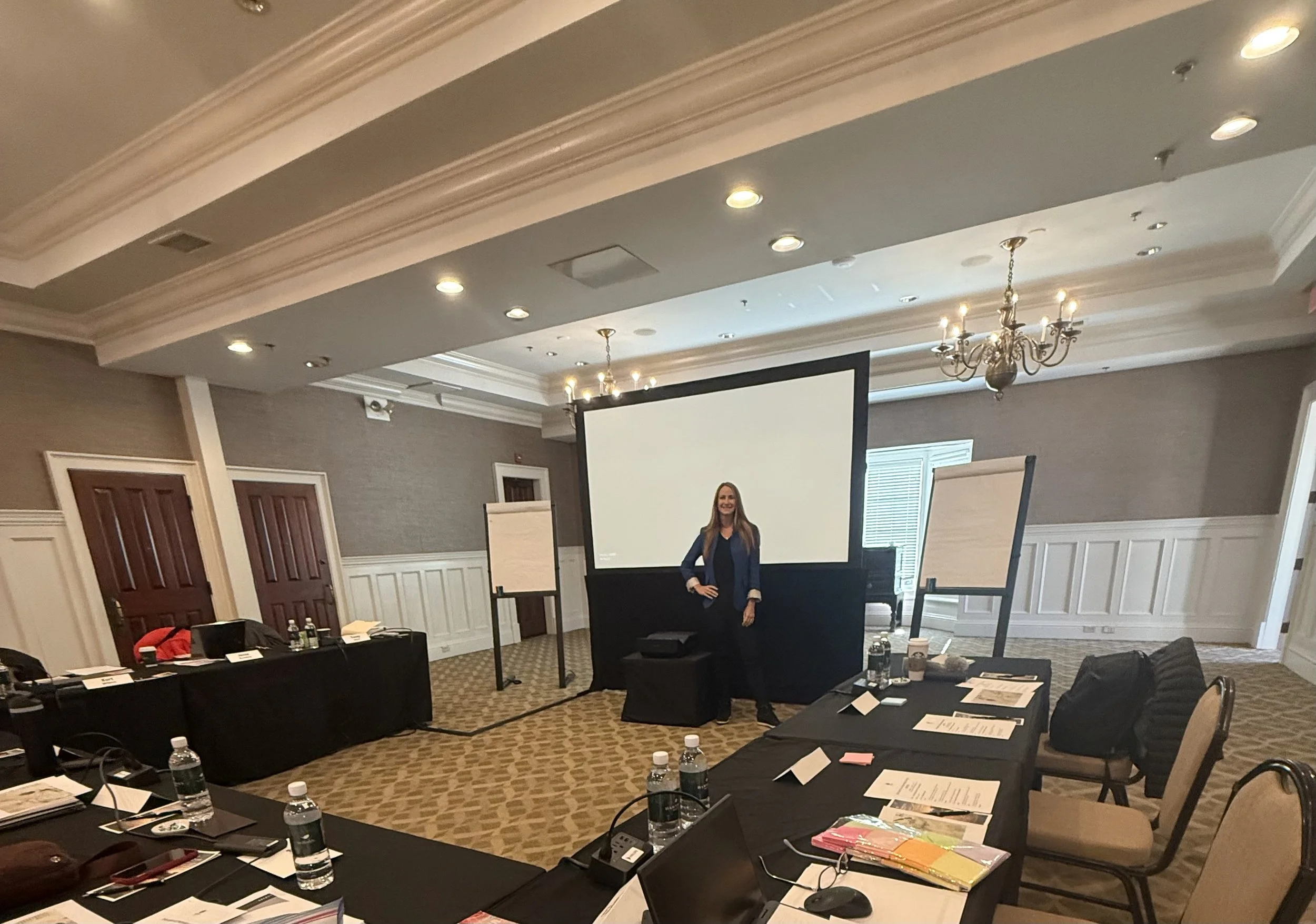
ELT offsite, designing the architecture.
When Speed Outruns the System
There's a particular kind of CEO that private equity loves — and that I love coaching, even when it feels like wrestling an alligator with Vaseline.
High-wattage. Boundary-testing. Playing chess three moves ahead while everyone else is still setting up the board. The kind of leader who walks into a board meeting and turns a two-hour presentation into a forty-five-minute working session that actually solves something.
I recognize that wiring instantly. It lives in me too.
But here's what speed does when the operating system can't keep up: it creates a kind of organizational vertigo. The CEO sees the path forward with total clarity. The team sees the path changing every two weeks. Both things are true simultaneously.
If ambiguity energizes you, you unconsciously assume it energizes your CFO. If structure feels like bureaucracy, you miss that it's oxygen for half your ELT — the half responsible for translating your vision into repeatable operations.
So what registers as resistance isn't resistance at all. It's a team trying to stabilize execution while the direction keeps accelerating underneath them. They're not pushing back on where you're going. They're drowning in how fast the ground is shifting.
The CEO I worked with in January got this. An activist circling. A declining business. No runway. He didn't have time to build around talent — he had to build the system that would make the talent effective. Ruthless priorities. Explicit decision rights. One named owner per outcome. A weekly cadence designed to catch drift before it becomes a quarterly surprise.
None of it was glamorous. Most of it would bore a visionary CEO senseless.
But what feels repetitive to the leader is often exactly the rhythm the team needs to execute when the leader isn't in the room. And that's the real measure — not what happens in your presence, but what sustains without it.
The Gap That Ends Executive Careers
While broken systems create execution friction, the thing that actually ends executive careers is more personal — and harder to see from the inside.
I call it the Intent-Impact Gap — the distance between what a leader believes they're doing and what their peers actually experience.
And it compounds fast.
A CxO I coached recently had technical expertise nobody questioned. Fast. Analytical. High standards. Enterprise-minded. Everything you'd want in a senior leader.
His 360 told a story he didn't recognize as his own.
When he took on additional scope to move things faster, peers felt their boundaries disappearing. When he escalated issues to his level to get them resolved, peers felt managed around. When he insisted on data-driven rigor, peers felt every decision grind to a halt waiting for one more analysis.
Zero ill intent. Maximum collateral damage.
Executives rarely get pushed out for incompetence. They get pushed out when strengths scale faster than self-awareness. The capabilities that earned you the C-suite seat land differently at this altitude, because the fundamental relationship changes. Functional teams work for you. Executive peers work with you. And when peer trust erodes, nobody refuses openly. They just start working around you. Quietly. Efficiently. Fatally.
The work wasn't about softening him. The best executives I coach don't become less intense — they become more precise. We built a peer-specific playbook: who needed direct challenge versus collaborative framing, who required pre-alignment before meetings so they could show up as allies, who heard urgency as clarity and who heard it as dismissal, and where data needed to lead — and where relational credibility had to lead first.
He texted me a few weeks later: "I've implemented a few changes and I'm sensing a shift."
That shift is what closing the Intent-Impact Gap feels like. Not transformation overnight. Just enough precision that intensity starts landing as influence instead of friction.
You get to the C-suite with functional expertise. You lead it with relational expertise. That's the difference between a strong executive and one who actually makes the people around them stronger.
The System Is the Strategy
Every one of these situations — the broken architecture, the CEO whose speed outruns the team, the high-performer whose strengths create collateral damage — converges on the same truth:
The system wasn't designed for the complexity it now carries.
When I run a pre-mortem with an ELT — three years from now, this company failed, why? — the room cracks open. Leaders start naming what they've been navigating around for months. The structural bottlenecks nobody acknowledges. The two peers who haven't had a direct conversation since Q2 despite sitting in the same weekly meeting. The gap between what the team says they're optimizing for and what the operating model actually rewards.
That's where the real work starts.
The executives who thrive in PE-backed environments aren't always the most individually brilliant. They're the ones who understand their job isn't just to perform. It's to build the system that lets everyone else perform too.
Because when the architecture is clear, talent compounds. When commitments are visible, execution accelerates. And when intent lands the way it was meant to, trust stops being a nice-to-have and becomes a force multiplier.
That's when leadership teams stop working around each other and start amplifying each other.
The system is the strategy. The leaders who build it first are the ones still standing when the hold period ends.
Ready to Turn Hesitation Into Clear Action?
Let's explore how the Purpose Value Creation Plan™ can help you and your leadership team navigate high-stakes decisions with confidence.