Leveraging Risk to Grow
This essay originally appeared on my Substack here.
I was 17 years old, riding a Greyhound bus from Birmingham to Winston-Salem with my friend Tycely Williams.
We were going to Wake Forest.
Money was something I didn't have and everyone else did. I felt that gap every day. I worked at the campus library, buried in government documents — I'd chosen it thinking it would be quiet. I also worked at a PR agency. I pieced the half of tuition that my academic scholarship didn’t cover.
So when the senior trip to Europe came up four years later, the math was simple: I couldn't go.
I went anyway.
I took out a credit card at 24% interest. It took me five years to pay it back.
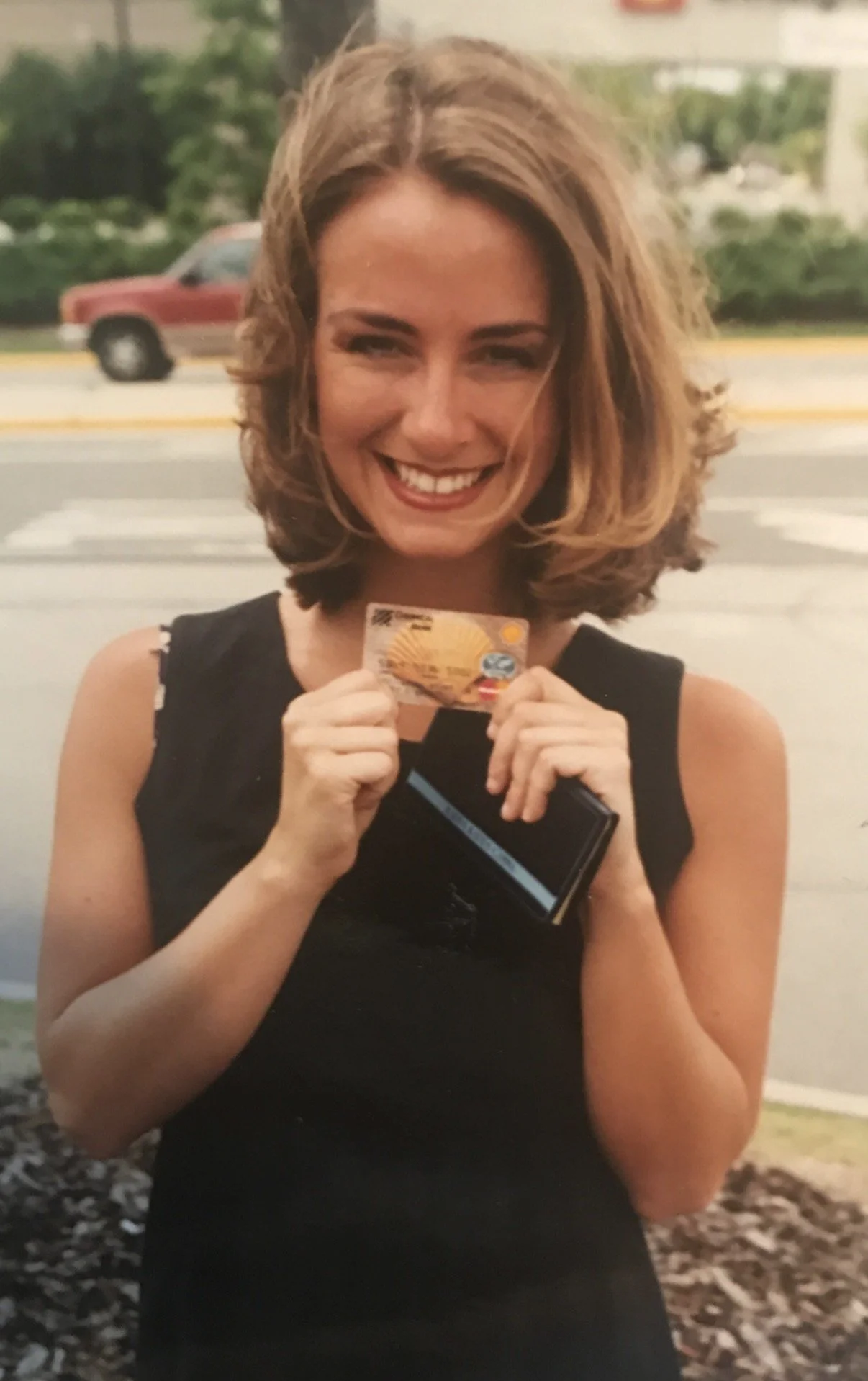
Senior Year, Wake Forest University
That trip changed the trajectory of my life.
Europe led to business school in France. Business school in France led to a decade living and working across Europe, the Middle East, and Asia. That decade built a career I couldn't have drawn on a map from Alabama — a $350 million P&L, five board seats, eight years as a PE Operating Partner, boardrooms on four continents.
People ask me often how I built the career I built. I wish I had a cleaner answer. The honest version is this: I had nothing to lose, I knew I wanted out of the small town I grew up in, and I let curiosity lead me. With each small risk that worked out, I took a slightly larger one.
That's the whole playbook.
One decision I couldn't afford made all of it possible. And that truth has shaped everything I believe about risk.
The Two Roads Most Leaders Take
Most leaders I know make decisions from one of two places.
The first is the shore. Protect what is. Wait for certainty. Don't move until you have enough proof that the outcome is survivable. The shore feels responsible. It feels prudent. And it is quietly, steadily, expensively wrong.
The second is recklessness. Charge the wave. Figure it out later. Consequences be damned. This one at least has energy — but it mistakes speed for wisdom and usually leaves wreckage behind.
There is a third road. It’s the bridge connecting the crossroads at a later point in time. I call it being Risk Traverse.
Not the absence of fear. What you build with it.
The Cost of Staying on the Shore
Here's what hesitation costs in real numbers. West Monroe asked 1,200 executives last year. Over half said competitors beat them to market. Not because competitors had better ideas. Because they moved faster.
We have more data than we've ever had. And we trust ourselves less than ever.
I watched this play out at my first job. Eastman Kodak. I was in the room when we had to choose what to put on the front page of our circulars. A young marketer made the case for digital cameras — less than one percent of sales at the time. The sales team overruled her. We promoted 200-speed film. Safe bet. Certain return.
Kodak had invented the digital camera. In 1975. They had the technology, the engineers, the resources, the market dominance. What they didn't have was the willingness to risk the known for the unknown.
By 2012 they were in bankruptcy.
That was not a failure of intelligence. Kodak had brilliant people. It was not a failure of resources. They had those too. It was a failure of imagination. Their identity became attached to what used to work. And that attachment cost them everything.
The hesitation tax. Paid in full. The bill was fourteen billion dollars.
What Traversing Risk Actually Looks Like
One of my heroes is Laird Hamilton — the best surfer to never enter a competition. He rides waves over a hundred feet tall. He introduced tow-in surfing, using a jet ski to catch waves so massive no human could paddle into them. Then he invented the hydrofoil surfboard — a board with an underwater wing that lifts the rider completely out of the water, eliminating drag, increasing speed, gliding above the surface entirely.
Nobody asked for this. Nobody said the surfboard was broken. Laird asked what it could become.
And here is what he is not. He is not reckless. He doesn't throw himself at hundred-foot waves without preparation, training, and a team around him. He was called fearless in an interview once and he disagreed. He said he has an intimate relationship with fear.
He is also not risk-averse. He doesn't stay on the shore because the waves are big.
He is Risk Traverse.
Risk averse stays on the shore and protects what is. Reckless ignores consequences and chases what thrills. Risk Traverse works with risk and propels what's possible.
I saw this at scale in Dubai in 2005. I was working as a management consultant in London when an email went to the office: anyone want to transfer to Dubai? Seventy years ago their economy was built on pearl diving. No oil wealth. No infrastructure. No precedent. My hand went up before my brain had a vote.
I landed in a tiny office in the Shangri-La Hotel on Sheikh Zayed Road. Across the street was a massive dirt pile. As construction began, we started marking the building's height on the window — like you'd mark a child's height on a door frame.
When the global financial crisis hit in 2008, the naysayers were thrilled. Dubai would finally fail. And then Sheikh Mohammed decreed: every project in progress will finish. He did not want a graveyard of cranes across his skyline.
They doubled down in the face of global uncertainty.
That building we were tracing on the window? It became the Burj Khalifa. The tallest building in the world.
Not by waiting for the right conditions. By deciding the conditions weren't the point.
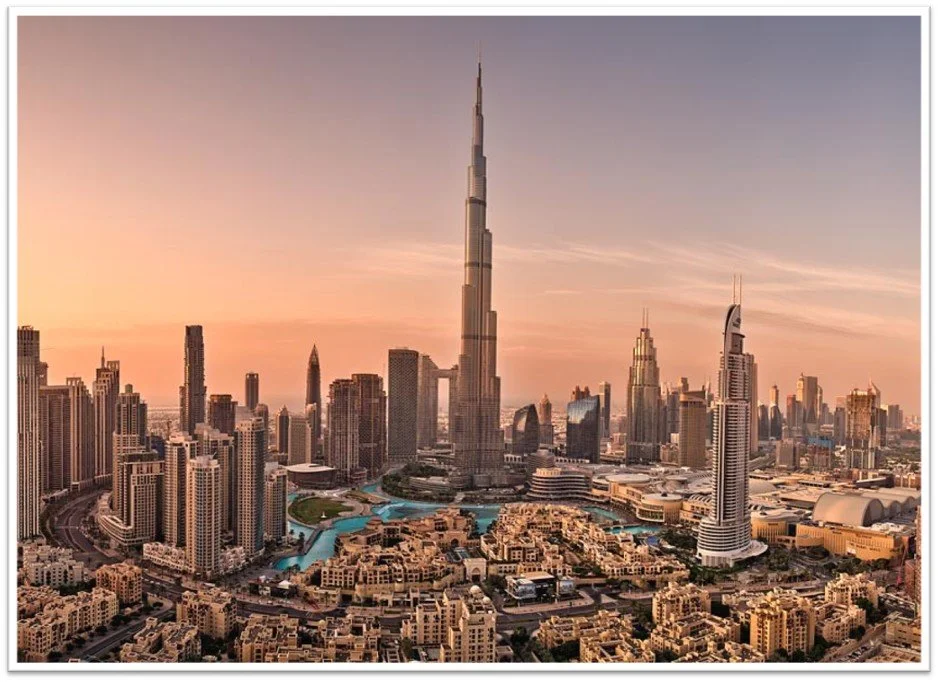
Burj Khalifa, Dubai
The Equation
I've built my practice on a simple idea: Intuition = Experience × Risk.
Risk is the multiplier of our experience.
You don't build pattern recognition by staying comfortable. You build it by collecting experiences — including the ones you couldn't afford to take and took anyway. The experience is what eventually becomes the intuition. The thing you can't explain to someone who hasn't lived it. That shows up when the data is incomplete and the stakes are high and the room is waiting for you to decide.
Analysis collects the dots. Intuition connects them.
The girl from Alabama on that Greyhound bus didn't have a framework. She had nothing to lose, a pull toward something she couldn't yet name, and the willingness to let that be enough.
17-year-old me — riding that bus, maxing out that credit card, scared to death to leave home — would tell me at 50:
Keep risk-making.
She'd be right.
Ready to Turn Hesitation Into Clear Action?
Let's explore how the Purpose Value Creation Plan™ can help you and your leadership team navigate high-stakes decisions with confidence.